Community win: Getting to the Hazel Johnson Cumulative Impacts Ordinance
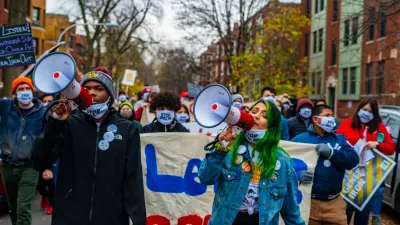
Photo by Oscar Sanchez
Chicago Environmental Justice Network (CEJN) is a network of grassroots environmental justice organizations advocating for cleaner and healthier communities. The network is composed of Blacks in Green, Little Village Environmental Justice Organization, Southeast Environmental Task Force, Neighbors for Environmental Justice, and People for Community Recovery.
When CEJN started in 2011, there was a need for a safe space for EJ leaders to strategize and support one another. They had few resources to share at the time but their dedication to frontline communities kept them meeting through difficult times. Together, CEJN organized residents, built unlikely alliances, and transformed the environmental justice landscape in Chicago. It was an easy decision for the Chicago Frontlines Fund (CFF) to align with CEJN on a strategy to resource the frontlines
Working closely alongside network leaders, CFF learned that Chicago’s frontline communities were harmed by decades of land use policy involving the City’s industrial corridors. Listening to frontline leaders, rather than creating a funder-driven coalition, CFF funded CEJN member groups to build their own advocacy capacity. For the first time since its founding, CEJN was also resourced to hire full time staff to level up the network's collective strategizing and campaigns.
One result of this funding support to strengthen citywide EJ solidarity is the campaign to pass the Hazel Johnson Cumulative Impacts Ordinance (HJCIO). To ground this campaign, the coalition developed a cumulative impacts mapping tool that made environmental racism impossible to ignore. Through community-led research, “toxic tours,” and relentless organizing, CEJN helped move environmental justice from the margins into the center of Chicago’s public conversation.
Soon, a once-overlooked reality became common knowledge: nearly 30% of Chicago neighborhoods are designated environmental justice communities.
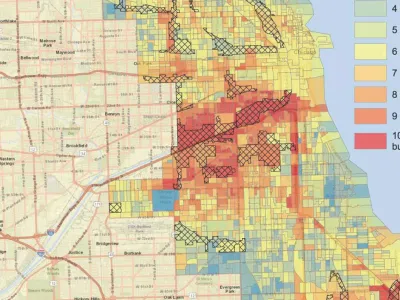
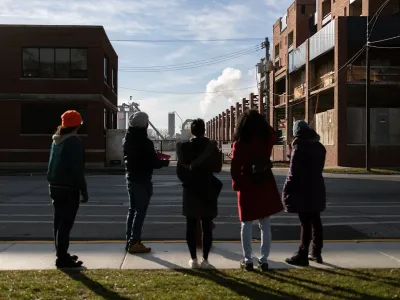
Chicago Environmental Justice Network
Today, environmental justice language shapes conversations across City Hall, planning agencies, philanthropy, and community development spaces throughout Chicago. What was once dismissed as a neighborhood issue is now recognized as a citywide responsibility. Now, we are at a point where the City Council is weighing in on the Hazel Johnson Cumulative Impacts Ordinance (HJCIO). The ordinance is meant to hold polluting industries accountable before moving into already overburdened neighborhoods. The HJCIO demands community voice, transparency, and accountability in decisions that directly impact residents’ health and future.
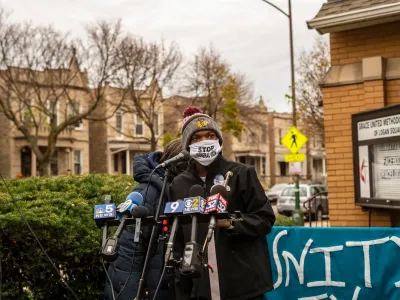
Photo by Oscar Sanchez
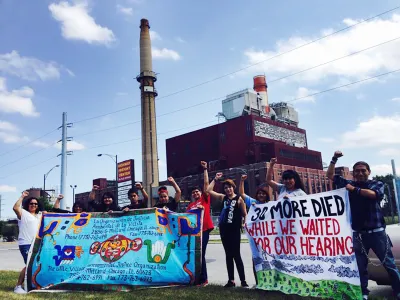
Chicago Frontlines Fund’s early trust-based support gave the coalition the flexibility to organize on its own terms and build lasting community power. Prior to CFF, funding for environmental justice organizing in Chicago was abysmal, and organizers worked for little pay and minimal benefits because their lives depended on it. CFF stepped in and provided the much-needed funding and capacity building support for the network to build power and win.
Kim Wasserman, a long-time Chicago EJ leader, summarized CFF’s funding approach, “Very rarely do you have a funder who listens and lets you run how you want without dictating your strategy. That trust is why this coalition is still alive and active today.”
Very rarely do you have a funder who listens and lets you run how you want without dictating your strategy. That trust is why this coalition is still alive and active today.
Keep in Touch
Learn about what’s happening on the ground, and be part of our dedicated community of donors and allies.

Fund community futures
From stewarding wealth creation to investing in neighborhood visionaries, lasting change takes a mighty village. Step into the work by making a donation to our pooled fund or becoming a donor partner.